
 EN
EN
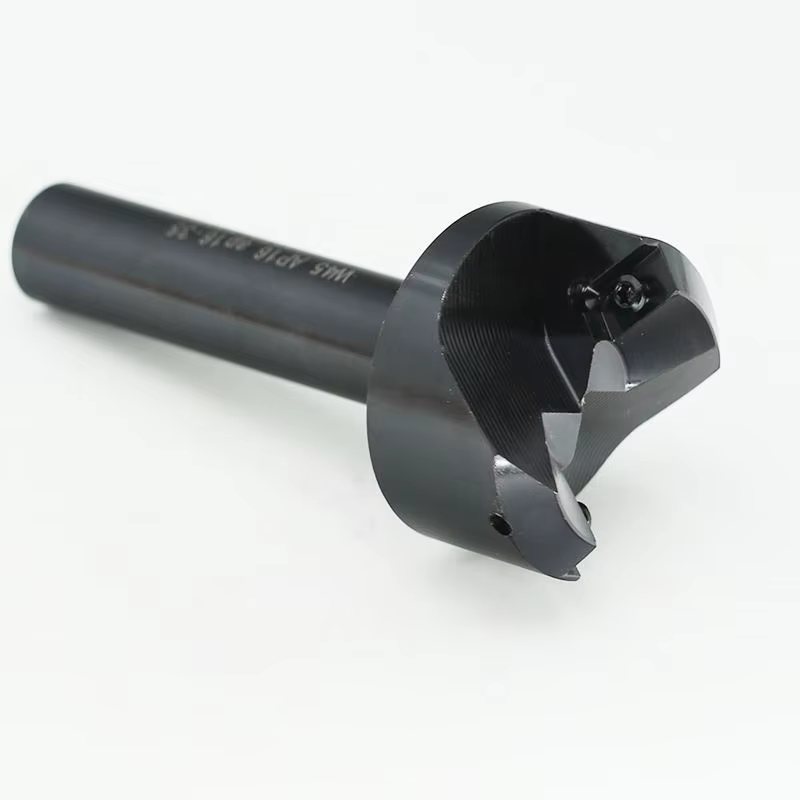
CVD vs. PVD Metal Insert Coating Processes
Selecting the right coating process is a critical first step in engineering a high-performance metal insert. The two dominant technologies—Chemical Vapor Deposition (CVD) and Physical Vapor Deposition (PVD)—operate on fundamentally different principles and deliver distinct material properties. Understanding their process characteristics allows engineers to match the coating to the specific thermal and mechanical demands of the application.
CVD: High-Temperature Chemical Reactions for Dense, Conformal Metal Insert Coatings
CVD relies on chemical reactions in a vacuum chamber at elevated temperatures, typically between 800 °C and 1050 °C. Precursor gases decompose or react on the heated surface of the metal insert, forming a dense, uniform, metallurgically bonded coating. Because it is a gas-phase process, CVD achieves excellent conformal coverage—even over complex geometries like internal chipbreaker grooves and coolant holes—without line-of-sight limitations. This makes it especially valuable for inserts with intricate 3D features. However, the high deposition temperature restricts use to heat-resistant substrates such as cemented carbide or cermets. Common CVD coatings include titanium carbide (TiC), titanium nitride (TiN), and diamond. These hard, wear-resistant layers excel in continuous cutting operations—such as high-speed turning of cast iron—where thermal stability and extended tool life are paramount.
PVD: Low-Temperature Physical Vapor Deposition for Precision-Thin Metal Insert Coatings
PVD operates at much lower temperatures—typically 200 °C to 500 °C—making it compatible with heat-sensitive substrates like high-speed steel (HSS), hardened tool steels, and stainless steel that would otherwise soften or distort under CVD conditions. In this line-of-sight process, a solid target material is vaporized via sputtering or evaporation and condenses onto the insert surface as a thin, precisely controlled film. While less conformal than CVD on complex geometries, PVD delivers exceptional edge definition and dimensional fidelity on sharp cutting edges and flat surfaces. Typical PVD coatings include titanium aluminum nitride (TiAlN), aluminum chromium nitride (AlCrN), and chromium nitride (CrN). These offer superior oxidation resistance, toughness, and edge retention—making them ideal for interrupted cutting, drilling, and high-speed machining where thermal shock and mechanical impact dominate.
Key Performance Comparison: Adhesion Strength, Thickness Control, and Substrate Compatibility for Metal Inserts
Engineers must evaluate trade-offs across three core criteria when selecting between CVD and PVD for metal inserts: adhesion strength, thickness control, and substrate compatibility. CVD forms strong chemical bonds with the substrate, delivering maximum adhesion suited for heavy mechanical and thermal loads. PVD relies on physical bonding—offering good adhesion but generally lower shear strength. CVD enables thicker coatings (5–20 µm) with excellent uniformity across complex 3D topographies; PVD yields thinner films (1–5 µm) with tighter dimensional control on planar and edge features. Crucially, CVD requires thermally robust substrates like tungsten carbide, whereas PVD safely coats a broader range—including HSS, tool steels, and stainless steel. The table below summarizes these distinctions to support evidence-based material selection.
| Parameter | CVD | PVD |
|---|---|---|
| Adhesion mechanism | High-strength chemical bond | Moderate-strength physical bond |
| Typical thickness | 5–20 µm | 1–5 µm |
| Thickness uniformity | Conformal on complex geometries | Line-of-sight, uniform on flat surfaces and edges |
| Process temperature | 800–1050 °C | 200–500 °C |
| Suitable substrates | Carbide, cermets, ceramics | Steel, carbide, HSS, stainless steel |
| Coating structure | Dense, columnar or equiaxed | Fine-grained, dense |
| Primary strength | Wear resistance at high temperatures | Toughness and edge retention |
Choosing between CVD and PVD ultimately depends on the application’s operational profile. CVD remains the preferred choice for continuous, high-temperature cutting of abrasive materials where maximum wear life is required. PVD is optimal for applications demanding sharp edge integrity, thermal sensitivity, or dynamic loading—such as milling aerospace alloys or drilling composites.
Established Single-Layer Metal Insert Coatings
TiN: The Industry-Standard Metallic Coating for General-Purpose Metal Inserts
Titanium Nitride (TiN) remains the benchmark single-layer coating for general-purpose metal inserts. Its signature gold color signals a balanced performance profile: hardness up to 2400 HV, moderate oxidation resistance, and reliable adhesion to tool steel and carbide substrates. TiN reduces friction and suppresses built-up edge formation—extending tool life significantly in drilling, tapping, and milling of non-ferrous metals, plastics, and cast iron. Though newer coatings offer specialized advantages, TiN’s cost-effectiveness, process maturity, and broad reliability ensure its continued adoption across automotive, energy, and general manufacturing sectors.
TiCN, CrN, and AlTiN: Enhanced Oxidation Resistance and Lubricity for Demanding Metal Insert Applications
For more aggressive machining conditions and challenging workpiece materials, advanced single-layer coatings provide targeted upgrades:
- TiCN (Titanium Carbonitride): Offers improved toughness and lubricity over TiN due to carbon incorporation—ideal for stainless steel and interrupted cuts where chipping resistance matters.
- CrN (Chromium Nitride): Delivers outstanding oxidation resistance (stable up to ~700 °C) and chemical inertness, minimizing galling during machining of titanium, nickel alloys, and reactive materials.
- AlTiN (Aluminum Titanium Nitride): Forms an in-situ aluminum oxide layer at elevated temperatures, acting as a thermal barrier stable to ~900 °C. With hardness exceeding 3000 HV, it excels in high-speed machining of hardened steels and superalloys—where heat generation threatens tool integrity.
These coatings reflect a shift from generic performance to application-specific optimization—guided by real-world thermal, mechanical, and chemical exposure data.
Next-Generation Metal Insert Coating Technologies
DLC and Nanocomposite DLC: Ultra-Low Friction and Wear Resistance for High-Precision Metal Inserts
Diamond-Like Carbon (DLC) coatings deliver unique surface functionality for precision-thin metal inserts—achieving friction coefficients as low as 0.01 and Vickers hardness above 3000 HV while retaining ductility. This combination is essential for micro-tolerance components subjected to cyclic loading, such as those used in medical device assembly or micro-molding. Nanocomposite variants—doped with silicon (Si-DLC) or transition metals (Me-DLC)—enhance chemical resistance to coolants and cutting fluids without sacrificing mechanical integrity. In abrasive environments, DLC reduces galling by 85% compared to standard TiN and extends service life threefold—validated in production trials across aerospace fastener systems and precision hydraulic components.
Multilayered and Surface-Textured Architectures: Synergistic Hardness-Toughness Balance in Advanced Metal Inserts
Modern high-performance metal inserts increasingly rely on engineered architectures—not just single-layer films. Alternating nanolayers (e.g., TiAlN/CrN) disrupt crack propagation through interfacial energy absorption, achieving fracture toughness up to 5.2 MPa√m while maintaining hardness >40 GPa. When combined with laser-patterned micro-dimples (10–50 µm diameter), these coatings create localized lubricant reservoirs that reduce adhesive wear by 72% in high-speed forming applications. This dual-phase design—integrating compositional and topographical control—is now standard in extreme-duty tooling for turbomachinery blades and die-casting molds, where thermal cycling above 800 °C demands both thermal barrier function and fatigue resilience.
Selecting the Optimal Metal Insert Coating by Application Demand
Choosing the right coating for a metal insert requires aligning material properties with actual operating conditions—not theoretical specs. In high-load, abrasive environments—such as automotive engine mounts or transmission components—hard, oxidation-stable coatings like TiAlN or multilayered TiAlN/CrN deliver the best balance of wear resistance and thermal endurance. For precision electronics and medical devices—where micron-level tolerances and low-friction articulation are critical—DLC or Si-DLC coatings provide ultra-low friction without compromising surface finish or biocompatibility. Temperature remains a decisive factor: sustained exposure above 500 °C favors CrN or AlTiN, while intermittent thermal spikes may allow optimized PVD TiCN. Finally, substrate compatibility cannot be overlooked—CVD’s high-temperature cycle risks distortion in brass, aluminum-bronze, or certain stainless grades, making low-temperature PVD the only viable option for many custom-engineered inserts. By systematically evaluating load severity, thermal profile, required lubricity, and substrate constraints, engineers can narrow options to coatings that maximize both performance and service life.
FAQ
Q: What are the primary differences between CVD and PVD coating processes?
A: CVD coatings are applied through chemical reactions at high temperatures (800°C–1050°C), forming dense, uniform layers suitable for heat-resistant substrates. PVD processes occur at much lower temperatures (200°C–500°C), using physical vaporization, providing excellent edge definition on heat-sensitive substrates.
Q: What types of substrates are compatible with CVD and PVD coatings?
A: CVD is suitable for thermally robust substrates like carbide, cermets, and ceramics. PVD is compatible with a broader range of materials, including heat-sensitive substrates like steels, high-speed steel (HSS), and stainless steel.
Q: Which coating process is better for complex geometries?
A: CVD offers superior conformal coverage even on intricate 3D features, while PVD provides line-of-sight coverage suitable for flat surfaces and sharp edges.
Q: What are the advantages of applying multilayered coatings?
A: Multilayered coatings can enhance fracture toughness and hardness by disrupting crack propagation. When combined with textured architectures, they reduce adhesive wear and improve long-term performance in extreme environments.
Q: When should DLC coatings be used?
A: DLC coatings excel in applications requiring ultra-low friction, high wear resistance, and precision tolerances, particularly for micro-tolerance components in medical devices and aerospace systems.