
 EN
EN
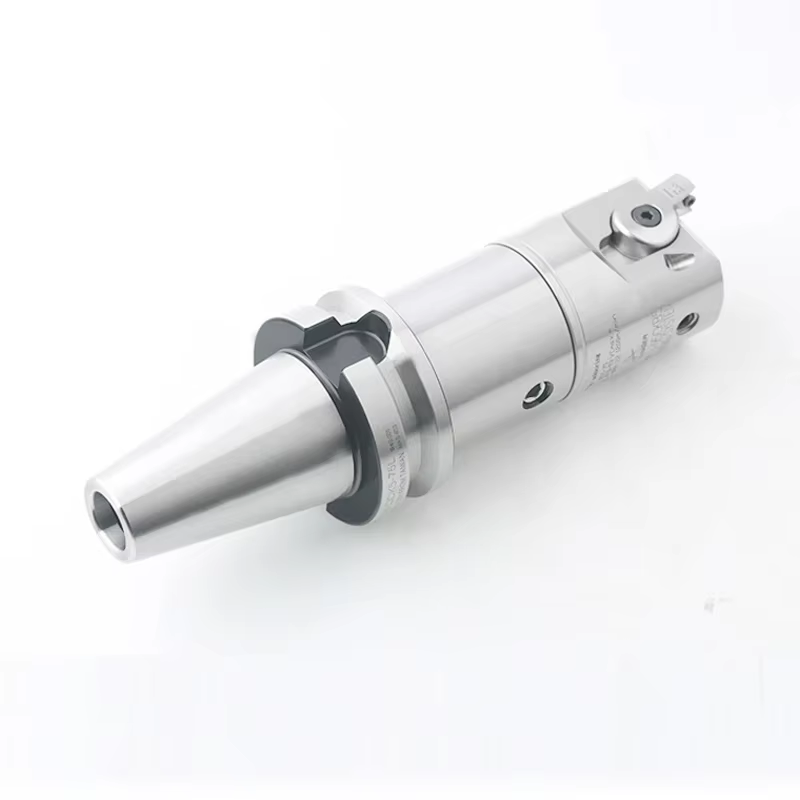
Superior Precision and Surface Finish with Multi-Axis CNC Machine Tools
How simultaneous multi-axis motion minimizes cumulative error and enhances geometric fidelity
Multi-axis CNC machine tools achieve superior precision by executing complex cuts in a single setup. Simultaneous movement along four or more axes eliminates manual repositioning between operations—removing a primary source of cumulative error from repeated fixturing and datum re-alignment. Continuous tool path control maintains stable cutting forces and minimizes geometric deviations across the entire workpiece. For high-stakes applications like aerospace components or medical implants, this delivers consistent dimensional accuracy and tight tolerances of ±0.005 mm.
Continuous tool orientation control: Reducing chatter and enabling mirror-like surface finishes
Dynamic tool orientation allows optimal positioning relative to complex contours—ensuring near-perpendicular contact and minimizing tool overhang. This reduces vibration and chatter, especially on freeform surfaces, while supporting finer feed rates and shallower depths of cut. The result is exceptional surface integrity, with roughness values (Ra) routinely below 0.4 μm—often eliminating the need for secondary polishing. Turbine blades, optical housings, and implant-grade titanium parts benefit directly from this capability, achieving near-mirror finishes straight off the machine.
Single-Setup Machining of Complex Geometries and Tight-Tolerance Parts
Multi-axis CNC machine tools fundamentally improve how manufacturers produce highly complex, tight-tolerance parts. Full-part accessibility in a single setup removes the need for repositioning—preventing datum shift and re-fixturing errors that drive tolerance stack-up in conventional multi-step workflows.
Eliminating datum shift and re-fixturing errors through full-part accessibility
Every time a part is unclamped and repositioned, microscopic alignment variations occur—compounding into measurable dimensional drift. Multi-axis machining preserves a single, stable reference frame throughout the operation. The tool reaches all required features—holes, threads, sealing surfaces, and organic contours—without moving the workpiece. This ensures critical geometric relationships remain intact, whether machining turbine blisks with continuous aerodynamic profiles or spinal implants with load-bearing thread geometry.
Medical and aerospace case evidence: 62% reduction in tolerance stack-up for spinal implants and turbine components
Real-world implementation confirms the impact: manufacturers report a 62% reduction in tolerance stack-up when shifting from multi-setup to single-setup multi-axis machining.
| Machining Approach | Positional Accuracy | Concentricity | Handling Risk |
|---|---|---|---|
| Multi-Setup | ±0.05 mm (cumulative) | Varies | High |
| Multi-Axis Single-Setup | ±0.01 mm | Consistent | Minimal |
In spinal implant production, this consistency ensures thread concentricity essential for long-term mechanical stability. In aerospace, it enables tighter profile tolerances on turbine components—critical for aerodynamic performance under thermal and mechanical stress. Reduced handling also lowers damage risk by 87%, per industry studies cited by the National Tooling and Machining Association (NTMA).
Increased Efficiency and Productivity Using Advanced CNC Machine Tools
40–70% reduction in total manufacturing time for structural aerospace parts (NTMA, 2022)
Multi-axis CNC machines boost productivity by consolidating traditionally sequential operations into one uninterrupted process. With no need to transfer parts between fixtures or machines, idle time and manual intervention drop significantly. This is especially impactful for aerospace structural components—deep-pocketed, thin-walled structures that demand precise, continuous cutting. According to the NTMA’s 2022 benchmark analysis, transitioning from 3-axis to 5-axis strategies delivered a 40–70% reduction in total manufacturing time. The gains stem from optimized, uninterrupted tool paths that sustain ideal chip loads and cutting parameters across complex geometries.
Strategic Cost Reduction Through Operation Consolidation
Multi-axis CNC machining drives strategic cost savings by collapsing multiple operations—including milling, drilling, tapping, and contouring—into a single clamping. This eliminates labor-intensive re-fixturing, secondary setups, and inter-machine transfers. Material handling time, energy use, and fixture/tooling investment all decline. Most critically, scrap caused by cumulative positioning errors across separate operations drops nearly to zero. Combined with faster cycle times and higher first-pass yield, this consolidation improves per-part profitability without compromising precision or surface quality.
FAQ
What is multi-axis CNC machining?
Multi-axis CNC machining involves tools capable of moving along four or more axes simultaneously, allowing for complex cuts and superior precision in a single setup.
How does it improve precision and accuracy?
By eliminating manual repositioning and maintaining continuous tool path control, multi-axis CNC machining reduces cumulative errors and ensures tighter tolerances.
What are the benefits of dynamic tool orientation?
Dynamic tool orientation minimizes vibration and chatter, enabling near-perpendicular cutting for mirror-like surface finishes and exceptional surface integrity.
How does single-setup machining reduce tolerance stack-up?
Single-setup machining eliminates datum shift by keeping the part in a stable reference frame throughout the process, preserving tight geometric relationships.
What industries benefit most from multi-axis CNC machining?
Industries such as aerospace and medical manufacturing benefit significantly due to the high precision, reduced handling risk, and time efficiency of multi-axis CNC machining.