
 EN
EN
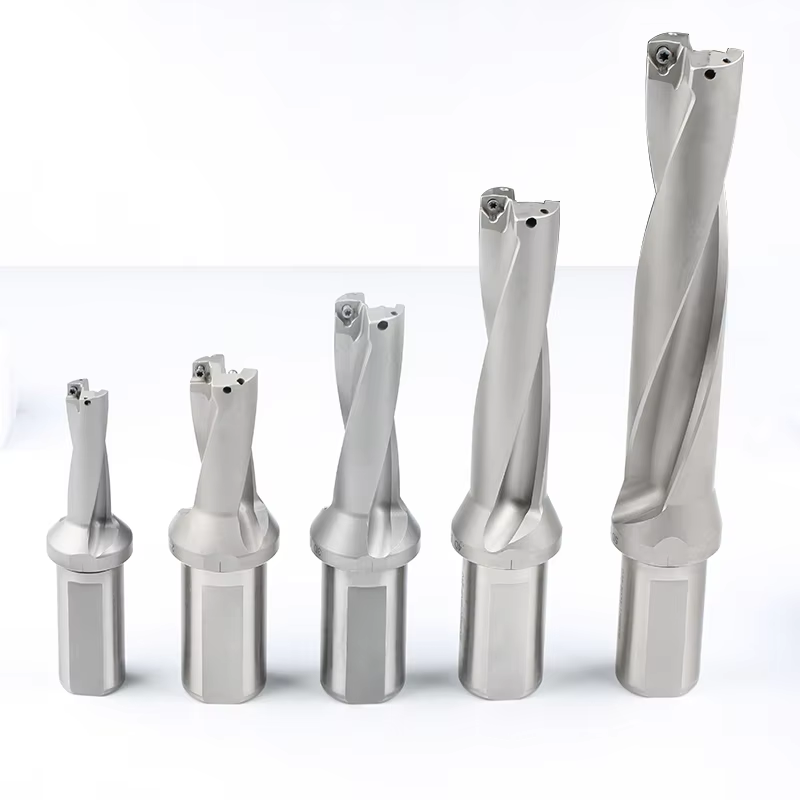
Twist Drill Breakage and Its Root Causes
Twist drill breakage is the most frustrating problem machinists face daily, and in my 15+ years in the precision tool industry, I’ve found it almost always stems from three issues: improper feed speed, misalignment, or using a low-quality drill with poor rigidity. A few months back, a CNC machining client came to me with constant twist drill breakage while drilling 42Cr steel—they were pushing a generic high-speed steel twist drill at too high a feed rate, and the drill’s weak shank bent and snapped instantly. Our company’s carbide twist drills solve this core issue with a reinforced web design and high-grade tungsten carbide material, boasting far greater rigidity than ordinary twist drills. CNC tool experts confirm that twist drill breakage in hard material machining is 80% avoidable with a rigid drill and calibrated feed speed. Our twist drills are also paired with precision ER32 collect chucks that ensure perfect alignment during installation, eliminating off-center pressure that cracks the drill body. What’s more, our technical team provides personalized feed speed guidelines for every twist drill we sell, matching the speed to the workpiece material—this small detail alone has cut drill breakage rates by over 90% for our clients. Unlike generic twist drills that fail under stress, our products are engineered to handle the tough conditions of industrial machining, making breakage a rare occurrence.
Dull Cutting Edges and Rapid Wear of Twist Drills
Dull cutting edges and fast wear are common twist drill problems that ruin drilling precision and slow down production, and they’re often the result of low-quality drill materials or inadequate cooling during machining. I once worked with a woodworking and metal fabrication shop that was replacing their twist drills every few days—their generic drills had uncoated cutting edges that wore down quickly when drilling aluminum and mild steel, even with basic cutting fluid. Our carbide twist drills feature diamond PCD inserts and advanced Altin coating on the cutting edges, a combination we’ve perfected through years of R&D that boosts wear resistance by over 20 times compared to uncoated twist drills. Industry material science experts state that a high-quality coating forms a protective barrier between the twist drill and workpiece, reducing friction and heat that cause dulling. Our twist drills also have optimized helical flutes that guide cutting fluid directly to the cutting zone, even for deep-hole drilling—paired with our crown deep hole U-drill’s inner cold shedding system, the cooling effect is unmatched, keeping the twist drill sharp for far longer. We produce over 5 million precision inserts yearly, so every twist drill we make has consistent, high-quality cutting edges that resist wear, meaning our clients replace their twist drills far less frequently and maintain smooth production.
Poor Hole Quality Caused by Twist Drill Defects
Twist drill problems often show up as poor hole quality—rough walls, off-center holes, and oversized diameters—and these issues are usually tied to uncalibrated drill geometry or low-precision manufacturing. A mold manufacturing client once complained about inconsistent hole sizes when using generic twist drills for micro-drilling, with tolerances way beyond their 0.01mm requirement. The problem was the generic twist drill’s asymmetrical cutting edges and uneven helical flutes, which created uneven pressure during drilling. Our company’s twist drills are manufactured with ultra-precise grinding technology, ensuring perfectly symmetrical cutting edges and calibrated helix angles (118° for general use, 135° for hard materials) on every single twist drill. CNC machining experts emphasize that geometric precision is the foundation of good hole quality, and our strict quality assurance process checks every twist drill for runout and symmetry before it leaves the factory—our products have a runout of less than 0.01mm, guaranteeing straight, precise holes every time. For clients needing ultra-high precision, our custom ODM twist drills are tailored to their exact machining needs, with flutes and cutting edges designed for specific hole sizes and materials. With our twist drills, poor hole quality becomes a thing of the past, and clients no longer waste time on rework or scrap parts due to drill defects.
Chip Jamming in Twist Drill Flutes
Chip jamming in the helical flutes is a common twist drill problem that leads to broken drills, poor hole quality, and even workpiece damage, and it’s caused by poorly designed flutes or incorrect drilling techniques. A heavy machinery manufacturing client had constant chip jamming issues when drilling deep holes with their old twist drills—the flutes were too narrow to evacuate chips, so metal shavings built up and stuck, forcing the drill to stop or break. Our twist drills solve this with wide, smooth helical flutes that are precision-machined for optimal chip evacuation, a design we’ve refined based on thousands of machining cases. CNC drilling experts confirm that flute design is the single most important factor in preventing chip jamming, and our flutes are angled to pull chips out of the hole automatically as the twist drill rotates, even for deep-hole drilling up to 10x the drill diameter. We also teach our clients simple techniques to avoid jamming: light, consistent feed speed and occasional reverse rotation of the twist drill to clear excess chips. Our deep-hole twist drills also work with our micro boring tools’ coolant systems, which flush chips out with high-pressure cutting fluid, eliminating jamming entirely. Unlike generic twist drills with narrow, rough flutes that trap chips, our products are built for smooth chip flow, keeping drilling efficient and problem-free.
Installation-Related Problems of Twist Drills
Many common twist drill problems aren’t from the drill itself, but from improper installation—and in my experience, this is the most overlooked issue in machining workshops. A small manufacturing shop once blamed our twist drills for poor performance, only for our technical team to find they were installing the twist drill with a loose, low-quality chuck that caused massive runout. Our company provides a full range of precision clamping tools to match our twist drills, including ER11, ER16, and ER32 collect chucks that hold the twist drill perfectly straight with zero play. CNC tool installation experts stress that a loose or misaligned chuck is the main cause of runout, vibration, and uneven wear on twist drills, and our clamping tools are engineered to the same high precision as our twist drills. We also offer step-by-step installation guidance for every twist drill and chuck combination, teaching clients to clean the drill shank and chuck bore first (to remove dust and chips) and tighten to the exact torque specification—our technical team even provides on-site training for new clients. What’s more, our twist drills have a precision-machined shank that fits all standard CNC tool holders, including our SER1616 turning tool holders, ensuring seamless installation on any machining equipment. By pairing our high-quality twist drills with our precision installation tools and guidance, clients eliminate almost all installation-related problems, unlocking the full performance of our products.